Journal · Field notes
Your customer can now ask Google if your photo is real
Since May 19, 2026, anyone can point Google Lens at a photo and ask whether AI made it. Google reads an invisible watermark that most AI image tools now write in by default.
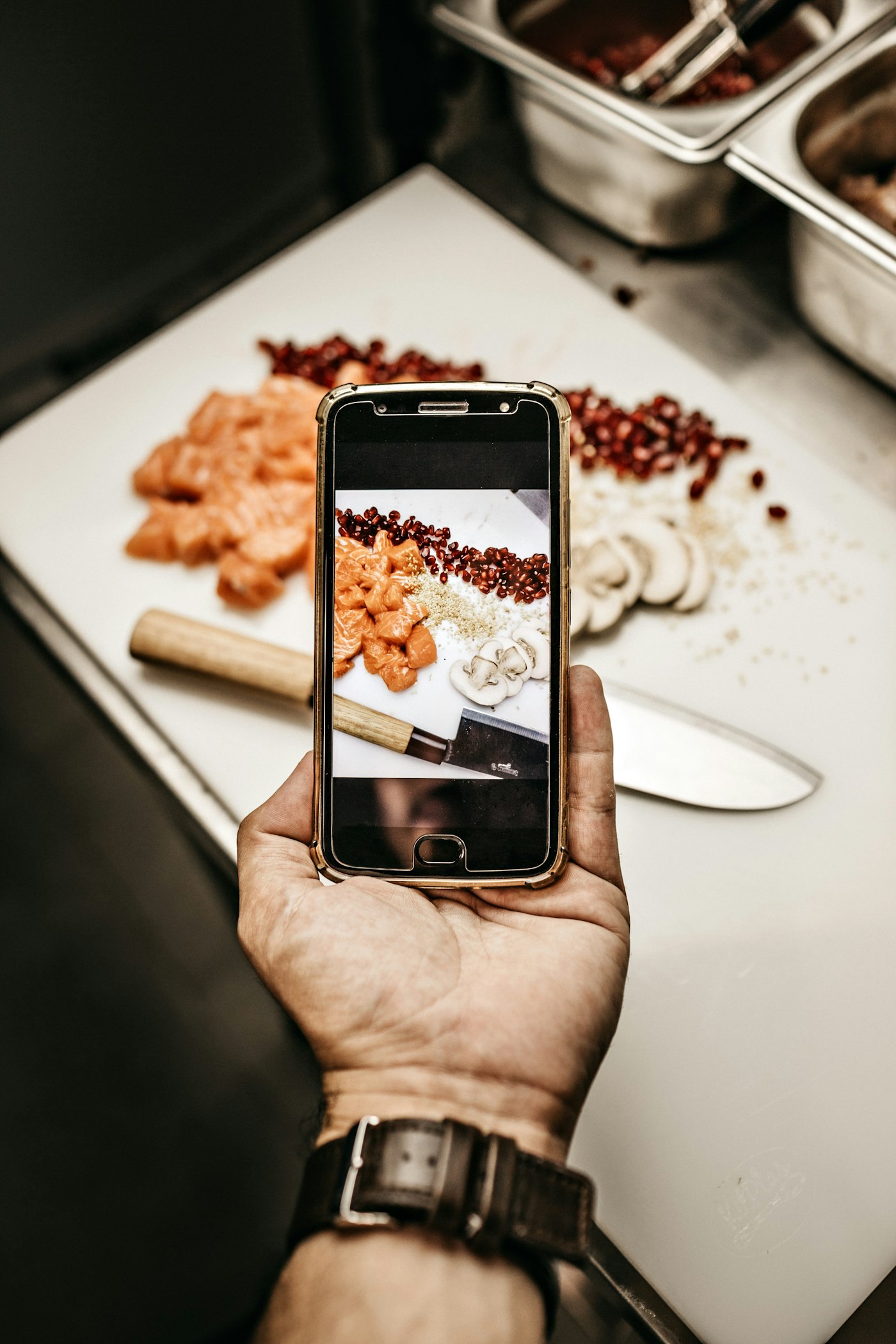
A barbecue place in Speedway posted a photo of their brisket plate in June. The bark was perfect. Every slice was the same thickness. Two regulars asked whether they'd hired a new pitmaster.
They hadn't. Nobody had cooked that brisket. The owner typed a sentence into an app on a Tuesday night, because the real tray had gone out the door before anyone thought to photograph it, and four seconds later he had a picture.
I don't want to make him a villain. He was tired and the photo he had was bad. Two things landed this summer that make that shortcut a much worse trade than it was in the spring, and you should know about both before you reach for it.
On May 19, 2026, Google shipped the ability to ask, inside Search itself, whether a picture was made by AI. Point Google Lens at it, circle it with Circle to Search, or ask Gemini in Chrome. Google looks for an invisible watermark called SynthID and a file record called C2PA Content Credentials, then tells the person holding the phone what it found.
On June 30, Google released Nano Banana 2 Lite, which renders an image in roughly four seconds for about three cents. It writes the watermark and the credential into every image by default.
The picture costs three cents now. The check takes two seconds. Both of those happened this summer.
How can a customer tell my photo is AI?
Long-press the image on an Android phone and use Circle to Search, or open Google Lens on any phone and ask "is this made with AI?" Google looks for the SynthID watermark, which sits in the pixels where your eye can't find it and survives a crop or a screenshot better than metadata does. It also looks for C2PA Content Credentials, a small record attached to the file that says which tool made the image and what was edited after.
Be honest with yourself about who does this. Most of your customers never will. The one who does is already suspicious, and suspicious people write the longest reviews.
I should say what these tools can't do. A missing watermark proves nothing. Plenty of AI images come out of tools that stamp nothing at all, and plenty of real photos lose their credentials the moment somebody screenshots them and reposts. Google is answering "did I find a marker," not "is this true." Anyone who tells you there's a reliable AI detector is selling one.
What does a fake photo cost?
Klaviyo and Datalily asked 8,000 people over 18 about this in December 2025 and published the results in March. Seven percent said visible AI-generated marketing makes them trust a brand more. Thirty-one percent said it makes them trust the brand less.
Four to one against, for a picture that cost three cents.
The odds are half of it. The other half is that a generated photo goes wrong in ways your customer clocks before they can explain why. The brisket has a bark no offset smoker in Indiana produces. The dining room behind the plate has a window where your wall is. The lettering on the menu board in the background is almost letters. Nobody says "that's AI." They say something about that place seemed off, and they drive to the other one.
You know this instinct already. You've had it about a stock photo on a contractor's website.
Generate the frame if you must. Never generate the subject. Nobody can order a plate that was never cooked.
What is AI photo editing good for?
I use these tools most weeks and I'd be lying if I called them all bad. The line I hold is about what the picture is claiming.
Fine, and worth your time:
- Cleaning up a photo you took. Straighten the horizon, crop the parking cone out, lift the shadow under the counter.
- Removing the delivery box somebody left sitting in front of your storefront.
- Relighting a real photo you shot under the wrong bulbs.
- Making something that reads as a graphic. A promo card, a holiday hours notice, a pattern behind your text. Nobody mistakes a flyer for evidence.
Not fine, and it will cost you more than it saves:
- The food. The haircut. The car on your lot. The bathroom you remodeled.
- Your dining room, your waiting area, your bay, your chair.
- Your staff. Your staff most of all.
A photo of the work you did is a promise about the work you do. A generated one is a promise you can't keep, and the person holding it up to the light is standing in your shop.
Three things worth doing this week
- Open your Google Business Profile photos and scroll your Instagram grid. Find anything you or somebody you hired generated. You'll know. Write down what it was supposed to show.
- Shoot the real version. Saturday afternoon, near the front window, phone held still, nothing fancy. We wrote up how to do this without hiring a photographer if you want the specifics.
- Keep your originals. If you use AI to clean up a real photo, save the file that came off your camera. It's the only thing you'll have if somebody asks.
None of this asks you to have an opinion about AI. It asks you to keep the photo of your brisket and your actual brisket in the same universe.
The pitmaster in Speedway went out and shot a tray on a Saturday around four, when the light comes low through the front glass and the fat still shines. It's a worse photograph than the one the machine made. He sold more plates.
Sources
| # | Source | What it backed up |
|---|---|---|
| 1 | Making it easier to understand how content was created and edited (Google) | The May 19, 2026 announcement that Google Lens, AI Mode, Circle to Search and Gemini in Chrome can check an image for SynthID and C2PA Content Credentials. |
| 2 | Nano Banana 2 Lite and Gemini Omni Flash available (Google Cloud) | The June 30, 2026 release, four-second generation, and C2PA credentials plus SynthID watermarks enabled by default. |
| 3 | Gemini API pricing (Google) | The three-cent figure: $0.034 for one 1024x1024 image on standard pricing, $0.017 on batch. |
| 4 | Google introduces a faster, cheaper image generator with Nano Banana 2 Lite (TechCrunch) | Independent coverage of the June 30 release and where it sits below Nano Banana 2 and Pro. |
| 5 | Shoppers aren't impressed by AI-generated marketing (eMarketer) | The Klaviyo and Datalily survey of 8,000 consumers aged 18 and up, fielded December 2025: 31 percent trust a brand less, 7 percent trust it more. |
| 6 | How to photograph your shop (Luminest) | Our own walkthrough for shooting the real version on a phone, no photographer needed. |