Journal · Playbook
Your cheapest customer this month is the one who already left
A text sent two or three weeks after a haircut, oil change, or cleaning costs a shop next to nothing and beats a Google ad that costs five to eight dollars a click for a stranger.
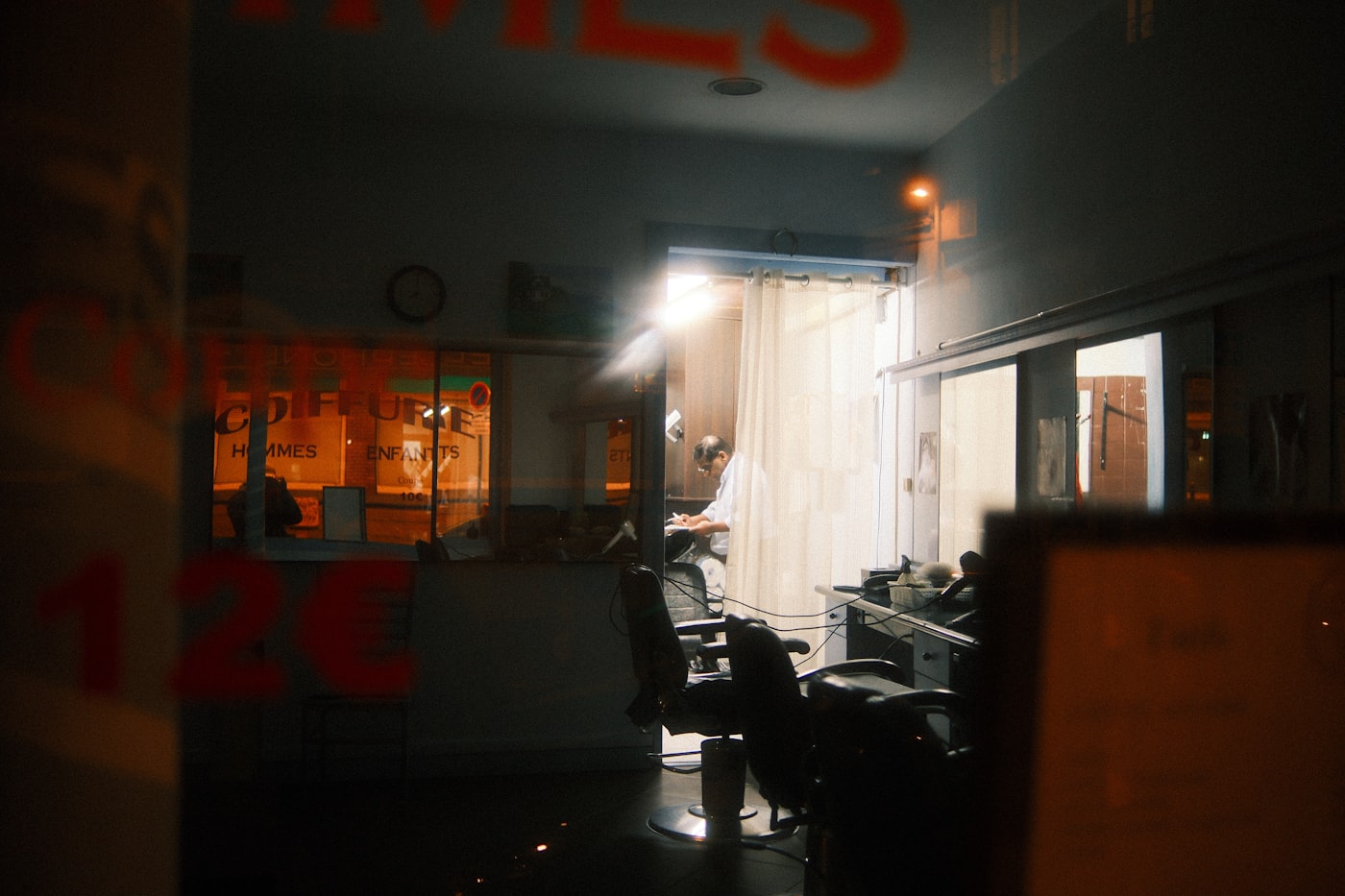
A stylist I know in Broad Ripple books six cuts a day. By her own count, about a third of those clients never come back. The haircut is fine. She never talks to them again once they leave the chair.
That gap is math, and the math is embarrassing once you run it.
How much does a new customer cost you?
In 2026, the average Google Ads cost per click for consumer services (the bucket that covers salons, home services, and most storefront businesses) runs $6.40. Automotive services average $2.46 a click (get-ryze.ai, 2026). That buys you one stranger looking at your ad, not booking with you.
Now price out a text to someone who already sat in your chair, already trusts your work, and already has your number saved. Most texting platforms charge $20 to $60 a month for a few hundred sends. Per message, that is a fraction of a cent.
Why does a text outperform almost everything else you pay for?
Text messages get opened 98 percent of the time, and 90 percent of those opens happen within three minutes. Email opens run around 20 percent. SMS campaigns get a 45 percent response rate. Email sits at 6 percent (Emarsys, 2026).
You already own this channel. The number is sitting in your booking system or your point-of-sale software right now. You already have it. You are not using it.
| New customer, Google Ads | Existing customer, text | |
|---|---|---|
| Cost to reach one person | $2.46 to $6.40 per click (get-ryze.ai, 2026) | A fraction of a cent per message |
| Response rate | Not applicable. A click is not a reply. | About 45% (Emarsys, 2026) |
| Do they already trust you? | No. They have never met you. | Yes. They already paid you once. |
| Time to a result | Days to weeks | Minutes |
What one auto shop did about it
A quick-lube shop in Speedway had the same gap on oil changes. Most cars need one every five thousand miles, roughly every four to five months for an average driver. The shop had no system for tracking who was due.
They started sending one text at the four-month mark: "It's been about four months since your last oil change at [shop]. Want to grab a time this week?" with a direct booking link attached.
Rebooking went from something they never measured to eleven extra cars a month, by the owner's count. At fifty to eighty dollars a change, that is real revenue from customers the shop already had.
The number lines up with the broader pattern. A follow-up sequence with a one-tap booking link tends to lift repeat bookings 20 to 30 percent (SchedulingKit, 2026), and SMS reminders cut no-shows 30 to 40 percent in service businesses generally (NextPhone, 2026).
Your best lead this month already paid you once and is waiting for you to text them back.
What to send
A good follow-up text does three things and nothing else:
- Name the service and roughly when. "It's been about three weeks since your color" beats "we miss you."
- Give one tappable next step. A booking link. Not "give us a call when you get a chance."
- Send once, not on a loop. A single well-timed text beats a weekly nag. Nagging gets you blocked, and blocked is worse than ignored.
What a text will not fix
A text will not save a bad haircut, a rude front desk, or a car that comes back with the same noise. Fix the service first. A reminder stapled to a bad experience reminds someone not to come back.
You also cannot text every number sitting in your database and call it marketing. The Telephone Consumer Protection Act requires clear opt-in consent before you send marketing texts, and violations carry statutory damages of $500 to $1,500 per message (Hyslip Legal, 2026). Get consent at booking, in writing, on the intake form the client already signs. Most booking software, including Square, Vagaro, and Housecall Pro, has a consent checkbox built in. Turn it on before you send anything.
Somewhere in your point-of-sale right now is a list of everyone who paid you in the last six months and never came back. That list is worth more than your next ad campaign, and it is already yours.
Sources
| # | Source | What it backed up |
|---|---|---|
| 1 | Average Google Ads CPC by Industry 2026 (get-ryze.ai) | 2026 average cost-per-click figures for consumer services ($6.40) and automotive ($2.46). |
| 2 | SMS Marketing Statistics 2026 (Emarsys) | SMS open rate (98%), 3-minute read window (90%), and SMS vs. email response rates (45% vs. 6%). |
| 3 | How to Increase Repeat Bookings (SchedulingKit) | 20-30% lift in repeat bookings from a follow-up sequence with a direct booking link. |
| 4 | SMS Follow-Up After Calls (NextPhone) | 30-40% reduction in no-shows from SMS reminder sequences in service businesses. |
| 5 | TCPA Per-Message Damages Guide (Hyslip Legal) | Statutory damages of $500 to $1,500 for sending marketing texts without consent. |
| 6 | About Data-Driven Attribution (Google Ads Help) | Background on how Google Ads values a single ad click and interaction. |