Journal · Engineering
Google Maps started ordering from your kitchen on August 6
On August 6, 2026, Google Maps began adding dishes to carts on Square and Toast, which means an AI now reads your POS item names to decide whether your kitchen matches a craving.
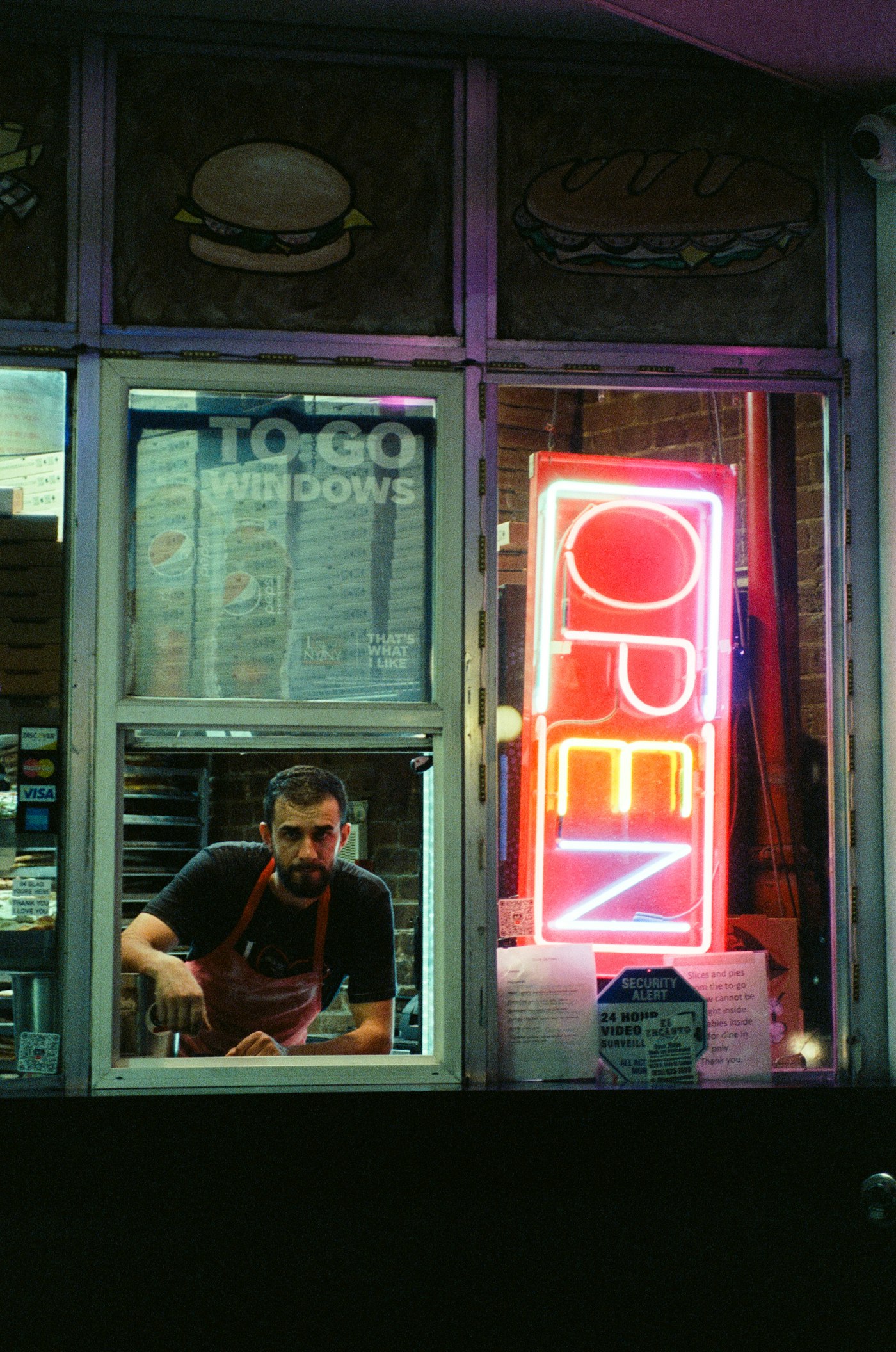
A deli in Irvington has 62 items in its Square catalog. Eleven of them are called some version of Sandwich.
That stopped being a cosmetic problem on August 6, 2026. Google's assistant inside Maps, called Ask Maps, learned to place food orders that day. A customer says what they feel like eating. Maps finds open places along their route that serve it, then loads the cart on Square or Toast so the customer can review and pay. Square and Toast are live in the US. Uber Eats is listed as coming soon with no date attached.
If you sell food or drink, run Square, and have a claimed Google Business Profile, you are already in this. No contract and no setup fee. Nobody called to ask you.
So the job this week is small and specific. Open your own menu catalog and read the item names the way a stranger types a craving, because that catalog is what the AI matches against now.
What Google actually shipped
The example query in Google's own announcement is worth reading twice, because it tells you how the matching works:
order spicy pad kee mao with seafood for me to pick up on my way home
Nothing in that sentence is a restaurant name. There is a dish, a heat level, a protein, and a pickup constraint. Ask Maps takes all four, narrows to places that are open, narrows again to places on the route, then goes hunting through menus for something that matches. When it finds one, it drops the item into a cart on that restaurant's own ordering system and hands the customer back the wheel to review and pay.
That last part matters more than it sounds. The order lands in Square's point of sale and kitchen display, or in Toast's own ordering system, instead of in a delivery marketplace sitting between you and the person eating your food. Toast covers roughly 180,000 restaurant and retail locations, and it is running a five dollar Toast Cash offer for guests who order this way, expected to start in late August 2026.
Square was blunter about the setup cost. Its announcement says there is "no added setup, contracts, or fees required," and that menu information syncs out of the Square Dashboard on its own.
| Platform | Status as of August 24, 2026 | What you have to do |
|---|---|---|
| Square | Live in the US | Nothing. Menus sync from Square Dashboard. Your Google Business Profile has to be claimed and active. |
| Toast | Live in the US | Nothing. Orders route through Toast's own ordering system into your POS. |
| Uber Eats | Announced as coming soon, no date | Nothing yet. |
| Clover, Lightspeed, a PDF, a phone | Not in this flow | Nothing available. |
Why do my menu item names suddenly matter?
Because the customer is not looking for you. The customer is looking for a dish, and your catalog is the index.
An agent can order a menu item that lives as a machine-readable record inside a Square or Toast catalog. It cannot order one that lives only inside a PDF. That is the whole rule.
An ordering agent cannot add a dish you never bothered to name. Sandwich #4 is not a sandwich to a machine.
The deli in Irvington makes a serious reuben. In its Square catalog the item is called Sandwich #4, because that is what the register key said in 2019 and nobody went back to fix it. Somebody driving up Washington Street who asks Maps for a reuben gets sent somewhere else. Not because the deli ranks poorly. Because it never spelled the word.
This is the same gap I wrote about in what a restaurant pays to sell food online in Indianapolis a few weeks ago. The money question and the data question keep turning out to be one question. You can pay for a beautiful ordering page and still be unreadable to the thing doing the ordering.
Five things to check this week
- Claim your Google Business Profile and make sure it is active. Square names this as the requirement on its side. If the profile is unclaimed or suspended, none of the rest applies. Worth checking your hours in the same sitting, since the assistant filters on open-right-now before it filters on anything else, and stale hours are still the most common thing I find wrong.
- Open your catalog and read the names cold. Square Dashboard, Items. Toast, Menus. Read each one as if you had never been in the building. Sandwich #4 becomes Reuben. Lunch Special B becomes Half Tenderloin and Fries.
- Use the words customers use. A pork tenderloin sandwich is a pork tenderloin sandwich in Indiana, not a Hoosier Classic. Cute names belong on the printed menu on the wall. The catalog is plumbing.
- Fill in descriptions and modifiers. The pad kee mao example filtered on "spicy" and "with seafood." Those are modifier and description fields doing work. Empty ones match nothing.
- Order from yourself. Ask Maps for something you sell, from a phone that is not signed into your business account, and watch what it does.
Do I need to switch to Square or Toast?
No. Not over this, and not this month.
Changing a point of sale is an expensive, painful project. Staff retraining, hardware, menu rebuilds, a week of slower tickets. Doing all of that to get into a feature that shipped three weeks ago and has no published numbers behind it is a bad trade. If you run Clover or Lightspeed or a paper pad, file this as one more reason to look hard at your options whenever the next POS decision comes up on its own schedule.
I would not assume this is the last one of these. Google says it is building something called the Universal Commerce Protocol for Food with its partners, which is the tell that more platforms get wired in later. The shops that do well will be the ones whose menu data is already clean when their turn arrives. That holds whether the buyer is a person, a search engine, or a chatbot that has never heard of your shop.
What nobody has answered yet
Google has published no advertising specification for Ask Maps. No disclosure format for how the assistant picks one restaurant over another. No statement on whether paid placement can influence that pick.
That is a real gap, and I would rather say so than sell you the whole thing as a gift. An assistant that chooses your dinner is a ranking system, and every ranking system Google has ever built eventually grew an ad product. France's competition authority has already flagged this style of platform-level integration as a lock-in risk, because the merchant does not hold the relationship. Square and Toast do.
None of that changes the work in front of you. Clean item names help a human reading your menu at a red light as much as they help an agent. When we rebuild an ordering flow or a site, that catalog audit is the first thing we ask for, which is why it sits inside how we scope a project.
The deli fixed its catalog in about forty minutes. Sandwich #4 is a reuben now, with a description that mentions rye and sauerkraut. Nobody has ordered it through Maps yet, as far as anyone there knows. But the word is finally written where a machine can read it, and that took less time than a lunch rush.
Sources
| # | Source | What it backed up |
|---|---|---|
| 1 | Order food in Ask Maps | Google's August 6, 2026 announcement, the pad kee mao example query, Square and Toast as launch partners, Uber Eats coming soon, and the US-first rollout. |
| 2 | Square and Google Deepen Collaboration to Support the Future of Food Ordering | Eligibility for US food and beverage sellers, the claimed Google Business Profile requirement, and the "no added setup, contracts, or fees required" language. |
| 3 | Google Maps gains food ordering through Square and Toast | Machine-readable catalog records versus PDF menus, the Universal Commerce Protocol for Food, the missing ad specification, and the French competition authority's lock-in concern. |
| 4 | Google Maps Launches Agentic Ordering Feature with Square, Toast, Uber Partnerships | Toast's roughly 180,000 locations and the five dollar Toast Cash offer expected in late August 2026. |
| 5 | Google Maps adds agentic features, including food ordering and hotel bookings | Independent confirmation of the launch date and the scope of the Ask Maps agentic expansion. |